
15 Things To Say That Every Cyclist Will Love Talking About
If you've ever wondered why cyclists get so animated discussing tire pressure or saddle height, here's the truth: these conversations are the glue that binds the cycling community together.
Knee pain is common in cycling because tiny movement flaws get repeated thousands of times. Learn how weak glutes, hips, and core can throw off knee tracking—and try seven simple strength exercises to ride pain-free.

Cycling is often seen as a low-impact sport, which makes it easy to assume your knees are safe. But many cyclists still deal with knee pain. Coaches and physiotherapists hear about it all the time, from beginners to experienced riders.
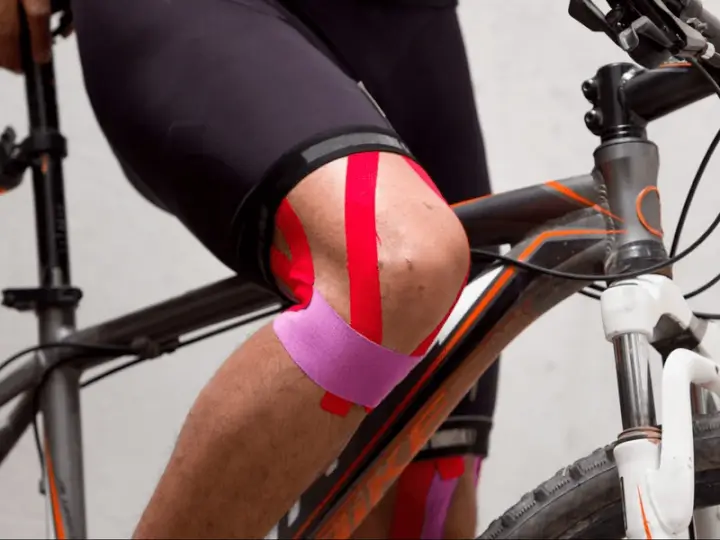
Research shows that about 23 percent of professional cyclists experience knee pain. Among recreational riders, the number is likely even higher.
The reason comes down to repetition. Every time you ride, your knees bend and extend thousands of times. Over the course of a long ride or a full weekend of training, that number can reach tens of thousands of repetitions. If your movement is even slightly off, that small issue gets repeated again and again until it becomes a real problem.
The knee is a hinge joint that sits between the hip and the ankle. It depends on surrounding muscles to move correctly. When those muscles are strong and balanced, your pedal stroke stays smooth and efficient. When they are weak or inactive, other muscles step in to compensate.
This often happens because of modern habits. Sitting for long periods can weaken the glutes, hips, and core. These muscles are responsible for stabilizing your pelvis and controlling how your legs move. When they are not doing their job, the quadriceps tend to take over.
At first, this might not seem like an issue. The quads are strong and capable. But they are not meant to do everything alone. Over time, this imbalance can affect how your knee tracks during the pedal stroke. Instead of moving in a straight line, it may shift slightly inward or outward. Repeating this pattern over and over can lead to irritation and pain.
Two areas are especially common sources of discomfort. The patellar tendon, located at the front of the knee, can become irritated from overuse. The iliotibial band, which runs from the hip down to the knee, can also become tight and inflamed.
Bike setup matters too. Saddle height, cleat position, and overall alignment can all influence how your knees move. Even small adjustments can make a big difference.
The good news is that you can reduce your risk of knee pain by strengthening the muscles that support the joint. Strength training off the bike helps improve balance, control, and alignment. It is also important to include mobility work, such as foam rolling, to keep your muscles functioning properly.
Below are seven exercises that can help you build strength and protect your knees. Perform two to three sets of each exercise, twice per week. You will need a resistance band and a moderate weight.
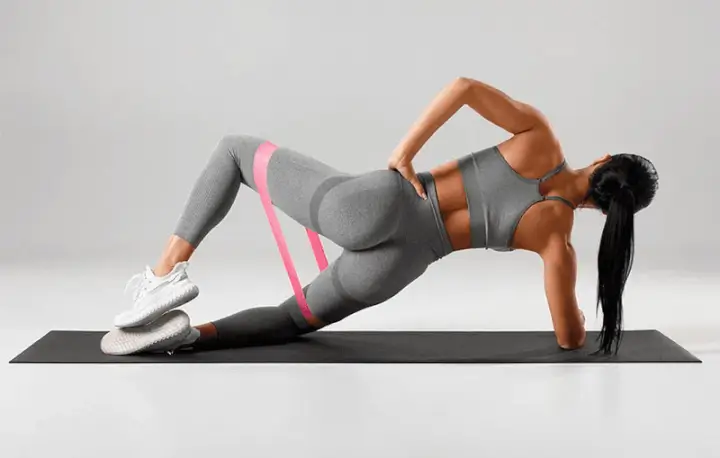
This exercise targets the gluteus medius, which helps keep your hips stable and your knees aligned.
Lie on your side with your knees bent and a resistance band placed just above them. Keep your feet together and your hips stacked. Slowly lift your top knee while keeping your pelvis steady. Do not roll backward.
Lower your knee with control. Perform 15 repetitions on each side.

The glute bridge strengthens your glutes, which are essential for stability and power.
Lie on your back with your knees bent and feet close to your hips. Place a resistance band above your knees. Press through your heels and lift your hips until your body forms a straight line from shoulders to knees. At the same time, gently push your knees outward.
Pause at the top, then lower slowly. Perform 10 to 15 repetitions.
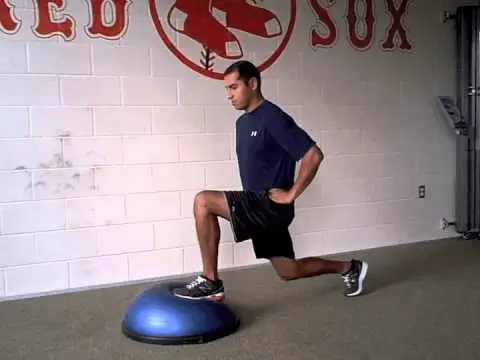
This exercise improves balance and strengthens stabilizing muscles.
Stand on an unstable surface such as a balance trainer. Step one foot back into a lunge. Keep your front knee aligned with your toes. Lower until both knees are bent, then push through your front heel to return to standing.
Perform 10 repetitions on each leg.
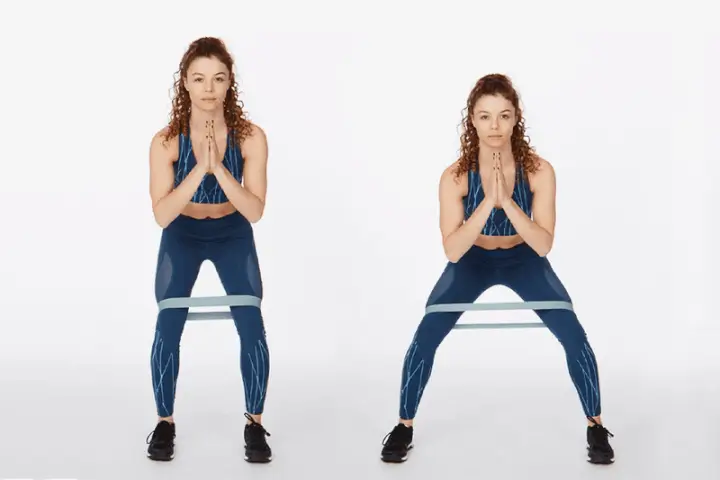
This movement strengthens the hip muscles that control knee position.
Place a resistance band around your ankles. Stand with your feet hip-width apart and lower into a slight squat. Step to the side while keeping tension in the band, then bring your other foot in.
Take 15 steps in one direction, then repeat in the other direction.
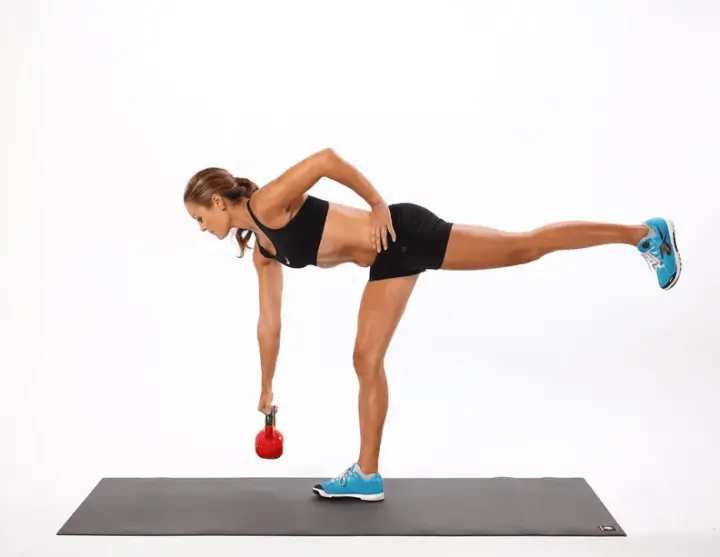
This exercise builds strength and balance at the same time.
Stand on one leg while holding a weight in the opposite hand. Slightly bend your standing knee. Hinge at the hips and lower the weight toward the floor while extending your free leg behind you.
Keep your back straight and your hips level. Return to standing and repeat for 10 to 15 repetitions on each side.
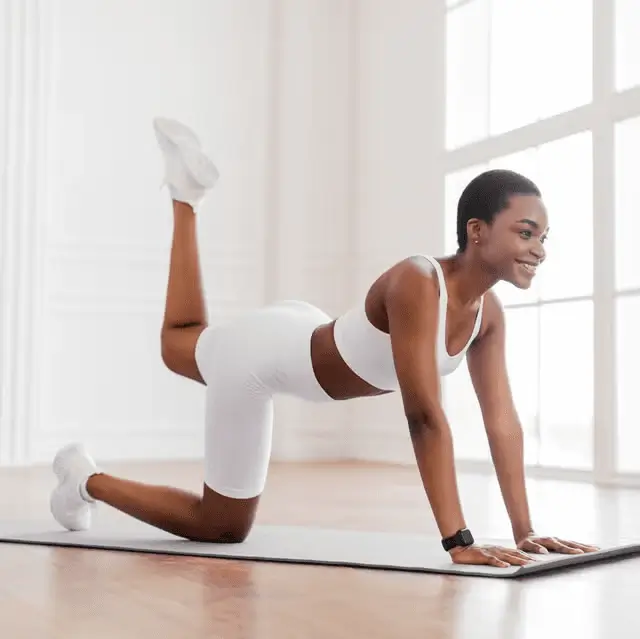
The donkey kick isolates the glutes and supports proper hip movement.
Start on all fours with your hands under your shoulders and knees under your hips. Keeping your knee bent, lift one leg upward. Avoid arching your back.
Lower slowly and perform 15 repetitions on each side.

The bird dog improves core stability and coordination.
Start on all fours. Extend one arm forward and the opposite leg backward. Keep your hips level and your back flat.
Return to the starting position and switch sides. Continue alternating for about 90 seconds.
Perfect for the new riders!
No spam. Cancel anytime.


